Freehold cask ownership · For verified U.S. accredited investors
Direct legal title to an individually identified cask from Ahascragh Distillery, held in your name. No fund and no fixed exit date. When and how you exit is your decision.
Ahascragh casks are freehold. There is no buyback and no guaranteed exit, and any exit depends on market conditions at the time. Investing involves risk, including the risk of total loss.
The distillery, how freehold ownership works, the casks available, storage, and your exit options.
Are you a U.S. accredited investor? *
Thank you for your interest. Ahascragh cask opportunities are only available to verified U.S. accredited investors, so we can't send the brochure in this case.
Selected this by mistake? Choose "Yes" above.
By submitting this form, you confirm that you are a U.S. accredited investor as defined under Rule 501(a) of Regulation D. Submitting does not constitute an offer to sell securities and creates no obligation to invest. Formal third-party accredited investor verification is required before any documents are signed or funds transferred.
Why freehold
A freehold cask is the simplest form of cask ownership. You buy a specific cask outright, it is held in your name at the distillery or an approved warehouse, and nothing about its future is decided for you.
That is the appeal: you choose how long it matures, and whether it is eventually sold, bottled, transferred or kept. Older whiskey is generally scarcer, and you are free to wait for the moment that suits you.
The trade-off is just as simple. No one is contractually obliged to buy the cask back, so when you want to exit, you rely on the market at that time.
"Freehold means the cask is yours. So is the decision on when to exit, and the risk that comes with it." We would rather you understand both sides before you buy. The brochure sets out how ownership, storage and exit options work in practice.
Your options
None of these is guaranteed, and each depends on the cask and the market at the time. But with freehold ownership, the choice is yours.
Leave the cask in bond for longer. Whiskey continues to develop in the wood, and older stock is generally scarcer.
Consider: ongoing storage and insurance costs, and natural evaporation over time.Sell the cask to another buyer, such as a collector, independent bottler or the trade.
Consider: there may be no active resale market or buyer when you want to sell.Have the cask bottled as your own Irish whiskey, for your collection, as gifts or for an occasion.
Consider: bottling, labelling, duty and shipping add cost and paperwork.Transfer ownership of the cask, for example to family, without it leaving bond.
Consider: tax treatment depends on your circumstances. Take your own advice.Side by side
| Ahascragh freehold cask | Copeland Cask Offering | |
|---|---|---|
| Ownership | Direct legal title to a specific cask | Direct legal title to a specific cask |
| Holding period | Your choice, no fixed term | Defined 5-year holding period |
| Exit route | Keep, sell, bottle or transfer, at a time you choose | Contractual put option at year five, at a pre-agreed price |
| Storage & insurance | Confirmed cask by cask before purchase | Included during the holding period |
| Main risk at exit | Finding a buyer at an acceptable price | Copeland's ability to honor the put option |
| Suits | Owners who want control and flexibility | Owners who want a defined exit from day one |
Both routes carry risk, including the risk of total loss. Read about the Copeland Cask Offering.
The journey
Your cask is identified and registered to you, with ownership and storage confirmed in the purchase documents.
New spirit must mature in cask for at least three years before it can legally be called Irish whiskey. Yours does that in bond.
The longer it rests, the more the wood shapes it. You can arrange to visit your cask, and ITW stays your point of contact.
Keep maturing, sell, bottle or transfer, when the timing suits you and the market allows.
The market
Whiskey has a built-in time lag. Every cask that will be bottled as mature Irish whiskey in the 2030s has to be filled now. After a decade of rapid growth, 2025 brought tariffs, softer demand and overstocking, and the industry responded by cutting production sharply.
Some in the industry argue that this pullback means fewer mature casks will be available in the years ahead. That is the supply-side case for laying down casks during a downturn rather than at the top of a boom.
The same data shows a market under pressure today. Exports fell in 2025, a U.S. tariff applies, and some newer distilleries have closed. Nobody can promise how supply and demand will look in the future, and with a freehold cask your exit depends on that market.
The distillery
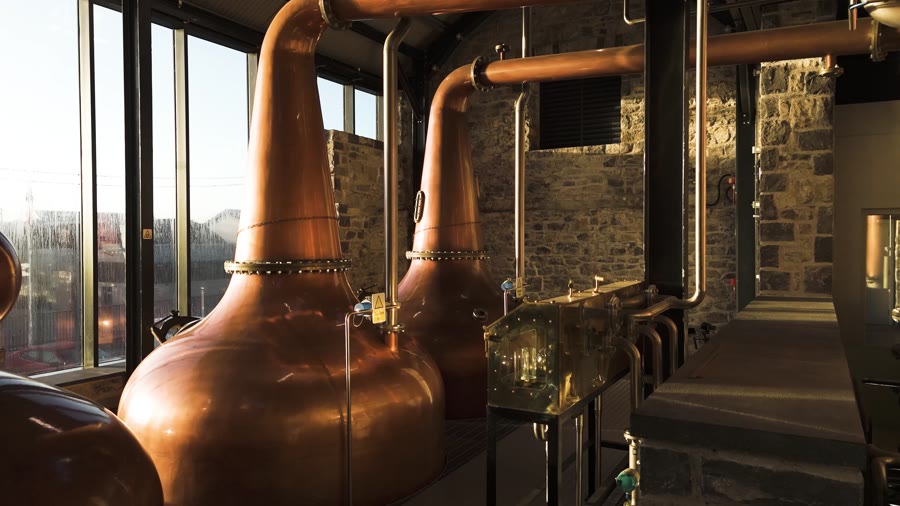
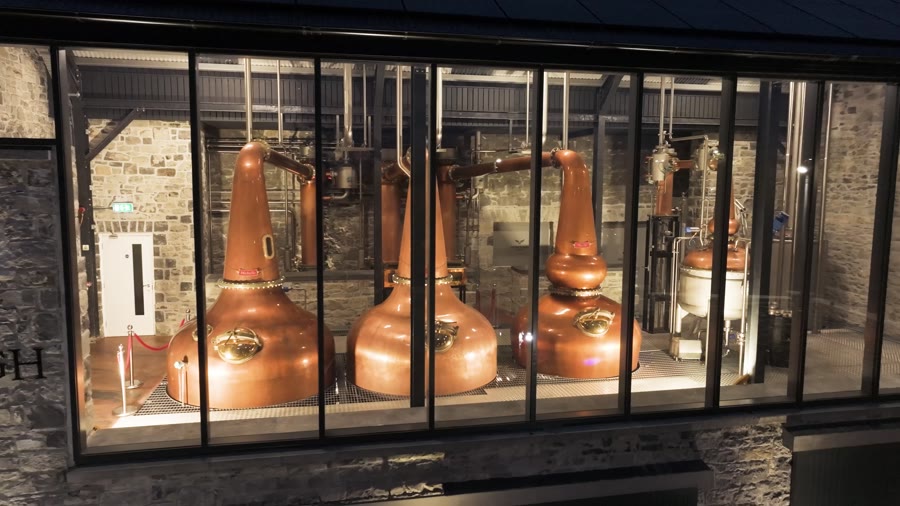
Ahascragh Distillery was founded in 2018 by Gareth and Michelle McAllister, who left expat life in Hong Kong to build a distillery in the west of Ireland. They found their home in a ruined 19th-century mill in the village of Ahascragh, near Ballinasloe in East Galway, and restored it stone by stone.
The distillery officially opened in 2023 as Ireland's first energised zero-emissions distillery. Today it produces Clan Colla and UAIS Irish whiskeys and Xin Gin, and welcomes visitors for tours, tastings and its own restaurant.
Ahascragh is one of Irish Trading Whiskey's exclusive Irish distillery relationships, giving ITW clients access to casks not typically available to private buyers.
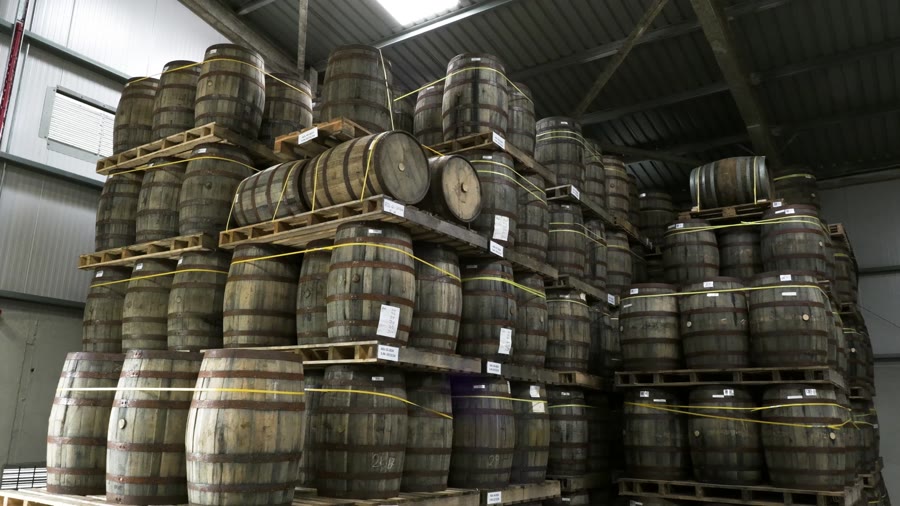
Every freehold cask is individually identified and held in its owner's name.
Ownership
ITW does not manage a fund, pool investor capital or hold your asset. Your cask is held in your name with the distillery or an approved storage provider, and you won't take physical possession while it matures.
Ahascragh opportunities are not standardised. The key terms are set for each specific cask and confirmed in writing before any documents are signed or funds transferred.
The people
Every client works directly with an ITW representative, from first enquiry through to completion and throughout the holding period.

MBA, CMgr, MCM. Russell joined Irish Trading Whiskey in June 2026 as U.S. Brand Ambassador, bringing a background in leadership, international diplomacy and community work.

A retired barrister with a career spanning more than 30 years as a member of a leading London chambers, overseeing legal, governance and commercial matters.

More than 30 years across the financial services sector, with a focus on client relationships and international markets.
Profiles are provided for background only. ITW does not provide investment, legal or tax advice.
In their words
Found this company to be straightforward and easy to work with. They explained the procedure, the pro's and con's, were not pushy and gave me space to make my own decision.
The customer service was excellent, and they gave me all the details I needed to make an informed decision.
The team guided me through and was overall a seamless process from the beginning. A huge highlight was having a private tour of the brewery and signing my own cask.
Comments from clients of Irish Trading Whiskey's UK business. Individual experiences vary and are not indicative of future results.
Questions investors ask us
You buy a specific, individually identified cask outright and hold direct legal title to it. It is held in your name with the distillery or an approved storage provider. There is no fund, no pooling and no fixed exit date.
No. Ahascragh casks are freehold and do not carry a contractual put option, buyback or guaranteed exit. If you want a defined exit, the separate Copeland Cask Offering is structured differently.
Potential routes include continued holding, private resale, bottling, or transfer and gifting. None is guaranteed. Their availability and value depend on the cask and market conditions at the time, and you should be prepared to hold for an extended, potentially indefinite period.
Storage and insurance terms depend on the specific cask and are confirmed before purchase. Insurance does not remove all storage or physical risk.
Yes. Investors can arrange to visit their cask, and hosted Irish distillery visits are available to ITW clients. Ahascragh also runs tours, tastings and a restaurant on site.
Pricing may be in euro or sterling while you fund in U.S. dollars. Exchange rate movements can affect the value of your investment in dollar terms, in either direction.
U.S. federal, state and local tax treatment depends on your individual circumstances. ITW does not provide tax advice, so speak to your own tax adviser before purchasing.
No. Irish Trading Whiskey LLC acts as seller and facilitator of direct-title cask transactions. ITW is not a registered broker-dealer or investment adviser, and does not provide investment, legal or tax advice.
Disclosures
Freehold casks are not suitable for everyone. Only invest money you can afford to lose entirely.
Whiskey casks carry a risk of total loss of the capital invested.
There is no contractual put option. Any exit depends on finding a route and the market at the time.
A cask's value may rise, fall or become difficult to realise. Past performance is not a guide to the future.
There may be no active resale market and no buyer when you want to sell. You may need to hold indefinitely.
Loss, damage, leakage, evaporation or warehouse issues can affect a cask. Insurance has limits.
Demand, tariffs, exchange rates and your personal tax position can all affect the outcome.
Next step
The Ahascragh brochure sets out the distillery, how freehold ownership works, the casks available and your exit options, so you can judge it properly before speaking to anyone.
Request the brochureSubmission does not constitute an offer to sell securities and does not create any obligation to invest.